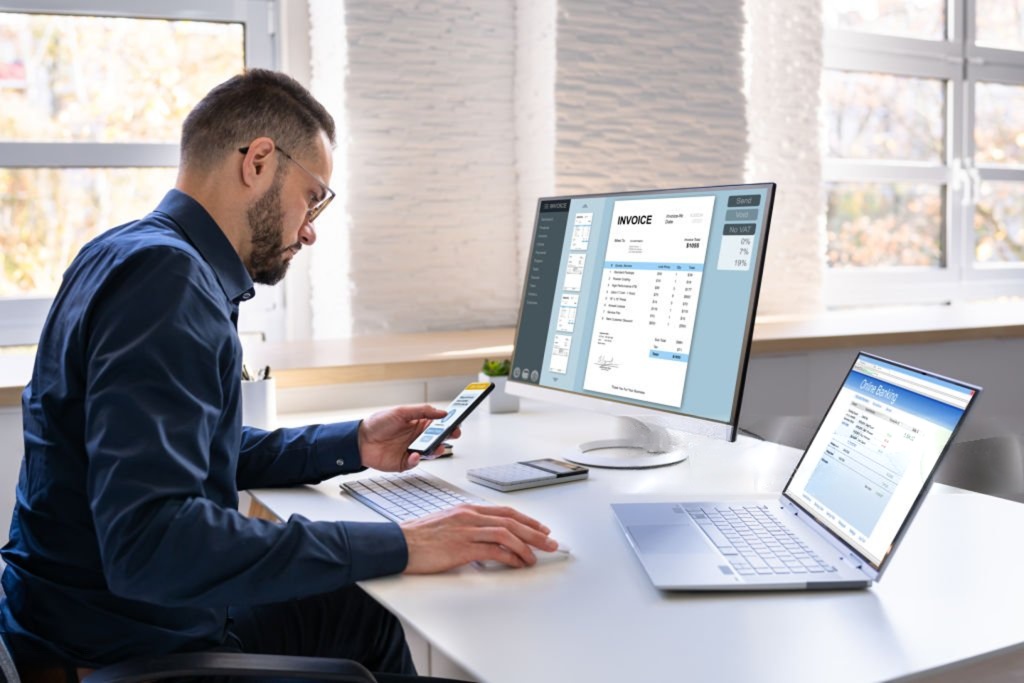
Choosing the right invoicing software for your Australian business is one of the most important operational decisions you can make. The wrong tool costs you hours every week — manually chasing overdue invoices, re-entering data across disconnected systems, and reconciling payments that don't match. The right one collects payments automatically, gives you real-time visibility over cash flow, and scales with your business without adding admin overhead.
With dozens of invoicing and payment platforms available to Australian businesses today, the decision isn't straightforward. This guide breaks down exactly what to look for — feature by feature — so you can choose a platform that fits how your business actually operates.
Why Invoicing Software Matters More Than Most Businesses Realise
Most businesses underestimate how much time and revenue they lose to inefficient invoicing. A study by MYOB found that late payments cost Australian small businesses an average of $7,200 per year in lost productivity alone — and that figure doesn't account for cash flow gaps caused by overdue invoices sitting unpaid for 30, 60, or 90 days.
The right invoicing software for Australian businesses does more than generate a PDF and send it by email. It automates the entire payment collection lifecycle — from invoice creation to payment reminder to reconciliation — so your team spends time on billable work, not chasing money.
Here is what to look for when evaluating your options.
1. Australian Payment Method Support
The first thing to check is whether the invoicing software supports the payment methods your clients actually use in Australia. This sounds obvious, but many international platforms are built primarily for US and European payment rails and offer limited or expensive support for Australian-specific payment methods.
Look for platforms that support:
Direct Debit via BECS —
the Bulk Electronic Clearing System is the standard direct debit rail for Australian bank-to-bank payments. Direct debit integration in Australia lets you collect recurring payments and one-off charges directly from client bank accounts, with lower transaction fees than card processing and no risk of card expiry disrupting a recurring billing relationship.
Card payments —
Visa, Mastercard, and Amex acceptance is table stakes, but check the fee structure carefully. Some invoicing platforms charge a flat percentage; others charge per-transaction fees that compound quickly at higher invoice volumes.
Payment links —
the ability to send a client a single URL they can use to pay an invoice immediately, without logging into a portal, significantly reduces friction and speeds up payment collection.
If a platform doesn't support BECS direct debit natively, that's a meaningful gap for any Australian business running recurring billing or subscription-based revenue.
2. Recurring Billing and Subscription Management
If your business bills clients on a regular schedule — monthly retainers, annual subscriptions, instalment plans — recurring billing software is non-negotiable. Manual recurring invoicing (creating and sending the same invoice every month) is one of the highest-volume, lowest-value tasks in any agency or service business, and it's entirely eliminable with the right platform.
Look for recurring billing software that supports:
Flexible billing cycles — monthly, quarterly, annual, and custom intervals
Automatic retries — failed payments should trigger an automatic retry rather than requiring manual intervention
Prorated billing — for clients who join or upgrade mid-cycle
MRR and ARR tracking — dashboards that show monthly and annual recurring revenue, churn, and growth in real time, so you always know where your business stands
Recurring billing software for Australian businesses should also handle GST automatically, applying the correct 10% rate to invoices and generating compliant tax summaries without requiring manual calculation.
3. Invoice Automation and AI-Powered Follow-Ups
The single biggest time drain in invoicing isn't creating invoices — it's following up on them. The average Australian business sends 2.3 follow-up communications per overdue invoice before it gets paid, and most of those are written manually.
Invoice automation changes this entirely. A good invoicing platform lets you set rules — for example, send a reminder 3 days before an invoice is due, another on the due date, and an escalation 7 days after — and then executes those rules automatically for every invoice, every time, without anyone on your team having to remember to do it.
More advanced platforms use AI automation to go further: learning which clients respond to which communication cadences, adjusting retry timing based on payment history, and flagging accounts that show patterns associated with non-payment before an invoice becomes significantly overdue.
When evaluating invoice automation, look for:
Customisable reminder sequences with configurable timing
Multi-channel reminders (email, SMS, or both)
Automated escalation rules for significantly overdue invoices
AI-driven retry logic for failed direct debit or card payments
Audit logs showing exactly which automated actions were taken and when
4. Security and Compliance
Any platform handling payment data on behalf of your business needs to meet baseline security requirements — and for Australian businesses, that includes both Australian Privacy Act obligations and payment card industry standards.
Look for invoicing software that offers:
PCI DSS-aligned infrastructure —
card data should never touch the invoicing platform's servers directly. It should be tokenised by a certified payment processor, with the invoicing platform acting as the orchestration layer rather than the storage layer.
Data encryption —
all data should be encrypted in transit (TLS 1.2+) and at rest (AES-256 or equivalent). Ask vendors explicitly about their encryption standards, not just whether they "use encryption."
Role-based access control —
for any business with more than one person involved in invoicing or finance, the ability to control exactly what each team member can see and do is essential. A junior account manager shouldn't have the same access to financial data as a CFO.
Audit logging —
every payment event, status change, and administrative action should be logged automatically with a timestamp and user ID. This matters for both internal accountability and external compliance.
2FA —
two-factor authentication should be available for all user accounts, not just admin accounts.
For a detailed breakdown of what enterprise-grade invoicing security looks like in practice, PayDirect's security page covers each of these areas specifically.
5. White-Label Capability
This is particularly relevant for agencies that manage invoicing on behalf of clients, or that want to offer payment collection as part of a broader service package. White-label invoicing software lets you present the invoicing and payment experience under your own brand — your logo, your domain, your colour scheme — rather than sending clients to a third-party platform that makes your operation look less professional.
Not all invoicing platforms offer white-labelling. Of those that do, the depth varies significantly — some only let you add a logo; others let you fully customise the client-facing experience, including the payment portal, email notifications, and invoice templates.
If white-labelling matters to your business model, confirm exactly what the platform customises before committing.
6. Integrations With Your Existing Tools
No invoicing platform operates in isolation. Your invoicing software needs to connect to the tools your business already uses — accounting software, CRM systems, communication platforms, and any internal tools your operations team relies on.
For Australian businesses, the most important integrations to check are:
Accounting software —
Xero and QuickBooks are the dominant accounting platforms for Australian SMEs and agencies. Two-way sync between your invoicing software and your accounting platform eliminates manual reconciliation and ensures your books stay accurate without double-entry.
Payment processors —
your invoicing platform should connect to your preferred payment processor natively. For Australian businesses using direct debit, that means integration with a BECS-enabled processor.
Developer tools —
if your business has a development team or runs custom workflows, look for a platform with a full REST API and webhook support. An invoicing API for developers gives you programmatic access to invoices, clients, payments, and subscriptions — letting you build exactly the integration your business needs rather than working around a platform's limitations.
Communication tools —
Slack notifications for payment events, automated email reminders, and SMS follow-ups should all be configurable without requiring developer involvement.
7. Transparent Pricing That Scales With Your Business
Invoicing software pricing varies enormously — flat monthly fees, per-invoice pricing, percentage-of-revenue models, and hybrid structures are all common. For Australian businesses processing significant invoice volume, the difference between pricing models can run to thousands of dollars per year.
Watch out for:
Percentage-of-revenue pricing — platforms that charge a percentage of every payment collected become expensive quickly as your business grows. A 0.5% fee sounds small until you're processing $1M+ annually.
Per-user pricing — platforms that charge per seat can become costly for growing teams. Confirm whether the pricing scales with users, invoice volume, or payment volume.
Hidden transaction fees — some platforms charge a monthly subscription fee and a per-transaction fee. Read the pricing page carefully and calculate your actual cost at your expected invoice volume.
Free trial availability — any serious invoicing platform should offer a free trial without requiring a credit card. This gives you the opportunity to test the platform against your real workflows before committing.
8. Ease of Setup and Onboarding
The best invoicing software for Australian businesses is the one your team will actually use consistently. A platform that takes weeks to configure or requires developer involvement for basic setup creates friction that leads to workarounds, inconsistent usage, and eventually, abandonment.
Look for platforms that offer:
Setup time measured in hours, not weeks
No-code configuration for invoice templates, payment methods, and billing rules
Clear onboarding documentation and responsive support
A clean, intuitive interface that non-technical team members can use confidently
The fastest-to-adopt platforms are usually those built specifically for the use case — an invoicing platform built for agencies will have sensible defaults, relevant templates, and an onboarding flow that mirrors how agencies actually bill clients, rather than forcing you to configure a generic tool into shape.
What the Best Invoicing Software for Australian Businesses Has in Common
Across all the features covered above, the best invoicing and payment platforms for Australian businesses share a few common characteristics:
They support Australian payment methods natively, including BECS direct debit
They automate the full payment collection lifecycle, not just invoice generation
They provide real-time visibility over cash flow, MRR, and overdue amounts
They meet enterprise-grade security standards without requiring your team to become security experts
They integrate with the tools Australian businesses already use
They scale without the pricing model becoming punitive as your revenue grows
If you're evaluating invoicing software for an Australian agency or enterprise and want a platform built specifically for this use case — including direct debit via Pinch Payments, AI-powered invoice automation, recurring billing, and a full REST API — PayDirect offers a 14-day free trial with no credit card required.
Frequently Asked Questions
What is the best invoicing software for Australian businesses?
The best invoicing software for Australian businesses depends on your specific needs, but key features to prioritise are BECS direct debit support, GST-compliant invoice generation, recurring billing, automated payment reminders, and integration with Australian accounting tools like Xero and QuickBooks.
Does invoicing software need to support GST in Australia?
Yes — any invoicing software used by an Australian business registered for GST needs to apply the correct 10% GST rate automatically and generate tax invoices that meet ATO requirements. Confirm this is handled automatically before committing to a platform.
What is the difference between invoicing software and accounting software?
Invoicing software focuses specifically on creating invoices, collecting payments, and automating follow-ups. Accounting software covers the broader financial picture — profit and loss, balance sheets, payroll, and tax reporting. Many businesses use both, with invoicing software syncing data into their accounting platform automatically.
Is direct debit better than credit card for recurring billing in Australia?
For recurring billing in Australia, direct debit via BECS is generally preferable to credit card for several reasons: lower transaction fees, no risk of card expiry disrupting recurring payments, and higher success rates for automated retries on failed transactions. Credit card remains important for one-off or client-preference scenarios.
How much does invoicing software cost for Australian businesses?
Invoicing software for Australian businesses typically ranges from free (limited features) to $50–$200+ per month for full-featured platforms. Pricing models vary — some charge flat monthly fees, others charge per invoice or per user. Calculate your expected cost at your actual invoice volume rather than comparing headline prices alone.