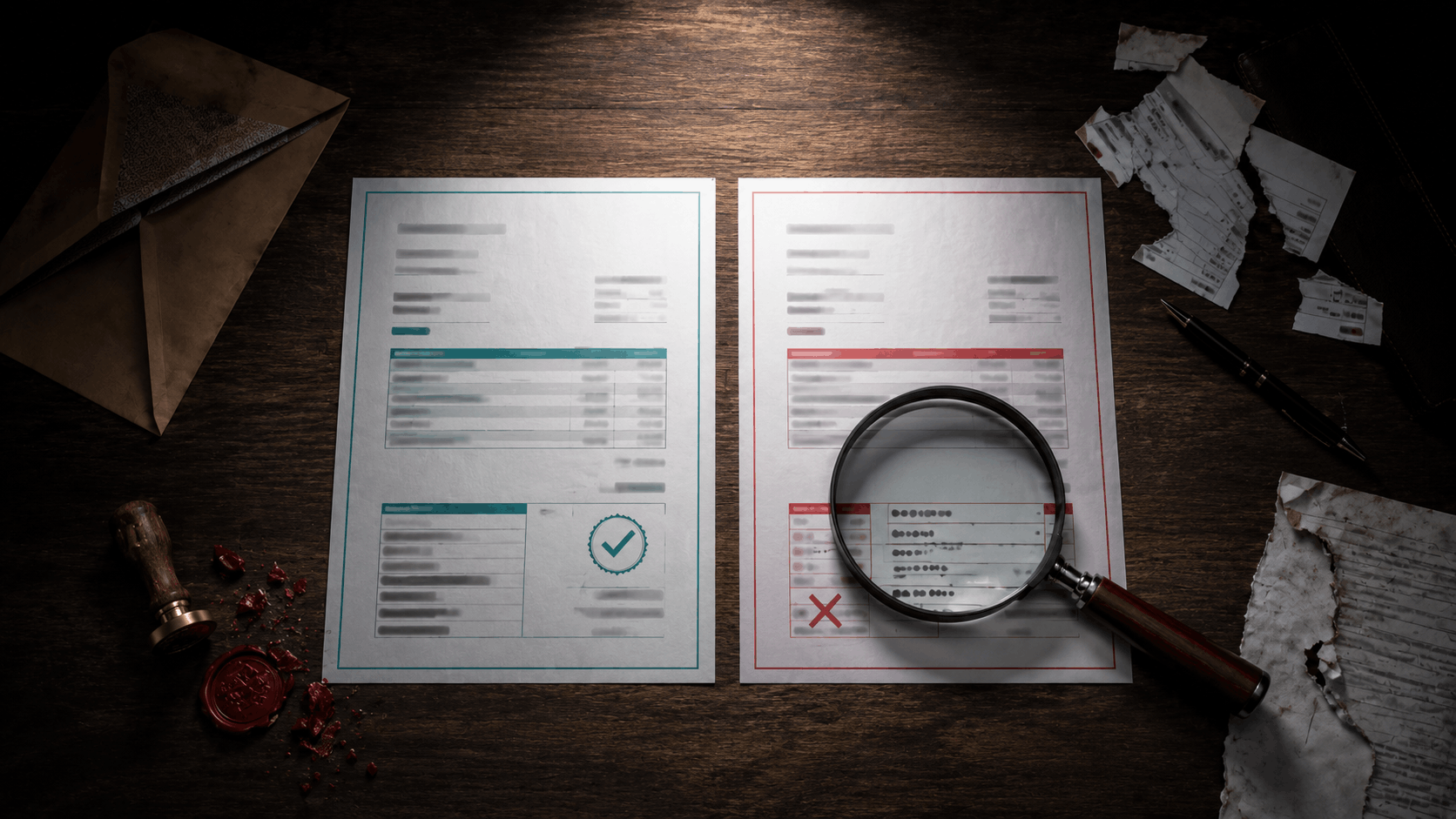
Invoice fraud is not a sophisticated cybercrime. It doesn't require advanced hacking skills, expensive tools, or access to enterprise IT systems. It requires an intercepted email, a modifiable PDF, and a client who trusts the invoice they receive because it looks exactly like every other invoice you've sent them.
That simplicity is what makes it so prevalent — and so costly.
The ACCC's Scamwatch data consistently shows payment redirection fraud among the highest-value scam categories affecting Australian businesses, with reported losses running into hundreds of millions of dollars annually. The actual figure is significantly higher — most incidents go unreported because businesses are embarrassed, because recovery seems unlikely, or because the loss falls below the threshold where legal action feels worthwhile.
Australian agencies and professional services businesses are disproportionately targeted. Regular, predictable invoicing patterns, established client relationships that create trust in received invoices, and high average invoice values make them attractive targets compared to retail or consumer-facing businesses.
This post explains exactly how invoice fraud happens in Australia, which attack methods are most common, and the structural changes that protect your business — not just procedural guidelines that get forgotten under operational pressure.
How Invoice Fraud Actually Happens
Understanding the mechanics of invoice fraud is the first step to preventing it, because the protection strategies that work are the ones that address the actual attack method rather than adding generic security theatre on top of a vulnerable process.
Payment Redirection Fraud
Payment redirection is the most common and highest-value form of invoice fraud affecting Australian businesses. The attack works like this:
A fraudulent actor gains access to either your email account or your client's email account — through phishing, credential theft, or business email compromise. They monitor the inbox until an invoice is sent or received. They intercept the invoice, modify the bank account details to substitute their own account, and either forward the modified invoice to the intended recipient or allow the original to be sent and intercept it in transit.
The client receives what appears to be a legitimate invoice — same layout, same letterhead, same amount, same reference number — with the only change being the bank details. They pay it without suspicion. The funds clear into the fraudulent account and are typically moved within hours. By the time the legitimate business follows up on a missing payment and the client realises they paid the wrong account, recovery is difficult and often incomplete.
Fake Invoice Fraud
Fake invoice fraud doesn't require intercepting a legitimate invoice — it involves sending entirely fabricated invoices from spoofed email addresses or domains that closely resemble the legitimate business.
Common variations include invoices for services never delivered, invoices for genuine services but with inflated amounts, and invoices sent to accounts payable teams at large organisations where the volume of incoming invoices makes individual verification difficult. Agencies that have invoiced a client for years are particularly vulnerable to this attack — the client's accounts payable team may approve payment without checking with the account manager because the sender looks familiar.
Supplier Impersonation
A variation of fake invoice fraud involves a fraudulent actor posing as one of your regular suppliers — a software provider, a contractor, a media vendor — and sending invoices for amounts consistent with your typical supplier relationship. For agencies managing multiple supplier invoices simultaneously, a plausible-looking invoice from a familiar supplier name is easily approved without verification.
Why Australian Agencies Are Particularly Vulnerable
Three characteristics of agency billing make agencies more vulnerable to invoice fraud than most other business types.
Regular, predictable invoicing patterns. An agency that sends the same client a similar invoice on the 1st of every month creates a pattern that fraudulent actors can exploit. Once they know when invoices are typically sent and what amounts are typical, timing a fraudulent invoice or interception becomes straightforward.
High trust in established client relationships. A client who has received 24 monthly invoices from the same agency without issue has zero reason to scrutinise the 25th. That accumulated trust is the vulnerability — it's what makes payment redirection fraud effective long after a business relationship is established.
High average invoice values. Agency invoices — particularly for retainer clients and project-based work — typically range from thousands to tens of thousands of dollars. The same attack that yields $200 in a consumer context yields $15,000 in an agency billing context. The effort-to-return ratio makes professional services businesses significantly more attractive targets than lower-value transaction environments.
Structural Protections That Actually Work
The protection strategies that fail are the ones that depend on consistent human vigilance under operational pressure — "always call the client to verify bank detail changes," for example. This guidance is sound but breaks down when the team is busy, when the client relationship is long-established, or when the modified invoice looks identical to every previous one.
The protections that work are structural — built into the billing infrastructure rather than relying on procedural compliance.
Eliminate PDF Invoice Attachments
The PDF invoice attachment is the primary attack surface for payment redirection fraud. A modifiable document containing payment instructions, sent through a channel that can be intercepted, is structurally vulnerable regardless of how careful your team is.
Smart invoicing software in Australia that delivers invoices through authenticated digital platforms — with payment collected through a secure payment link rather than a bank transfer to details in an attachment — eliminates this vulnerability entirely. There's no modifiable document. There are no bank details to intercept and substitute. Payment is collected through the platform, not through instructions that can be changed between sender and recipient.
Use a Secure Payment Collection Platform
A payment collection platform with authenticated payment links means that even if an invoice email is intercepted, the payment link points to a secure, platform-hosted checkout rather than to bank details in the document. An attacker who intercepts the invoice can't change where the payment link goes — it's hosted on the platform's servers, not embedded as modifiable text in a PDF.
This structural change addresses payment redirection fraud at the mechanism level rather than at the awareness level — it makes the attack impossible rather than making it slightly harder.
Implement Data Encryption Across Your Billing Workflow
Invoice fraud often begins with email compromise — attackers gaining access to email accounts to monitor invoice communications. Data encryption invoicing software addresses this by ensuring that payment data handled through the invoicing platform is encrypted in transit using TLS 1.2+ and at rest using AES-256, and that sensitive payment credentials are tokenised by certified payment processors rather than stored in readable form anywhere in the billing workflow.
Even if an attacker gains access to an email account, they find invoice notifications and payment confirmations rather than raw payment credentials that can be used to redirect funds or impersonate your business.
Connect Your Billing Systems Through Authenticated Integrations
Manual data transfer between systems — copying client bank details from one place to another, exporting invoice lists, manually updating payment records — creates opportunities for data to be intercepted or modified in transit.
Invoicing software integrations that connect billing, accounting, and payment systems through encrypted API connections eliminate these manual transfer steps. Data moves between systems automatically through authenticated channels rather than through human actions that can be intercepted or manipulated. Your accounting software updates automatically when payment is received. Payment status syncs without anyone exporting data through an unencrypted channel.
Implement Role-Based Access Controls
Limiting who can see and modify billing information reduces the internal attack surface and limits the damage from external credential compromise. When a team member's email credentials are phished, the attacker gains access to only what that team member could access — not to the entire billing system.
Purpose-built payment collection software implements role-based access as a standard control. Finance team members have appropriate billing access. Account managers can see invoice status without accessing payment credentials. Business owners retain full access. This granularity is absent from most manual invoicing workflows, where billing data is typically accessible to anyone who can open the shared drive or email account.
What to Do If Invoice Fraud Has Already Occurred
If your business has been targeted by invoice fraud — whether payment was made to a fraudulent account or a fraudulent invoice was caught before payment — the response sequence matters.
Contact your bank immediately. If payment was made to a fraudulent account within the past 24 hours, banks can sometimes reverse or freeze the transaction before funds are moved. Speed is critical — most fraudulent transfers are moved to secondary accounts within hours of receipt.
Report to ACCC Scamwatch. Reporting contributes to the national data on invoice fraud and may assist in identifying patterns connected to specific fraud operations. Reports can be made at scamwatch.gov.au.
Notify the client immediately. If your client paid a fraudulent invoice, they need to know immediately to contact their own bank and initiate a recall attempt. The sooner they act, the better the recovery prospects.
Review your invoicing infrastructure. A successful attack should prompt a structural review of how invoices are delivered and how payment instructions are communicated — not just a procedural reminder to be more careful.
Frequently Asked Questions
How common is invoice fraud in Australia? Invoice fraud — specifically payment redirection fraud — is one of the highest-value scam categories affecting Australian businesses. The ACCC's Scamwatch data shows hundreds of millions of dollars in reported annual losses from this attack type, with professional services businesses and agencies among the most frequently targeted due to regular invoicing patterns and high average invoice values.
How do fraudsters intercept invoices in Australia? The most common interception methods are business email compromise (gaining access to email accounts through phishing or credential theft), man-in-the-middle attacks on email transmission, and social engineering of accounts payable staff. Once email access is established, attackers monitor invoice communications and modify or substitute payment details before the invoice reaches its intended recipient.
What is the fastest way to protect my agency from invoice fraud? The highest-impact single change is eliminating PDF invoice attachments containing bank details and switching to a payment collection platform that delivers invoices with embedded payment links hosted on secure, platform-controlled servers. This removes the modifiable document that payment redirection fraud depends on and replaces it with a payment mechanism that attackers cannot modify between sender and recipient.
Can invoice fraud be fully prevented? No security measure eliminates all risk, but structural protections — authenticated digital invoice delivery, secure payment links, data encryption, role-based access controls, and connected billing integrations — address the specific mechanisms that invoice fraud exploits and make successful attacks significantly more difficult. The businesses most effectively protected are those that have made structural changes to their billing infrastructure rather than relying on procedural awareness alone.