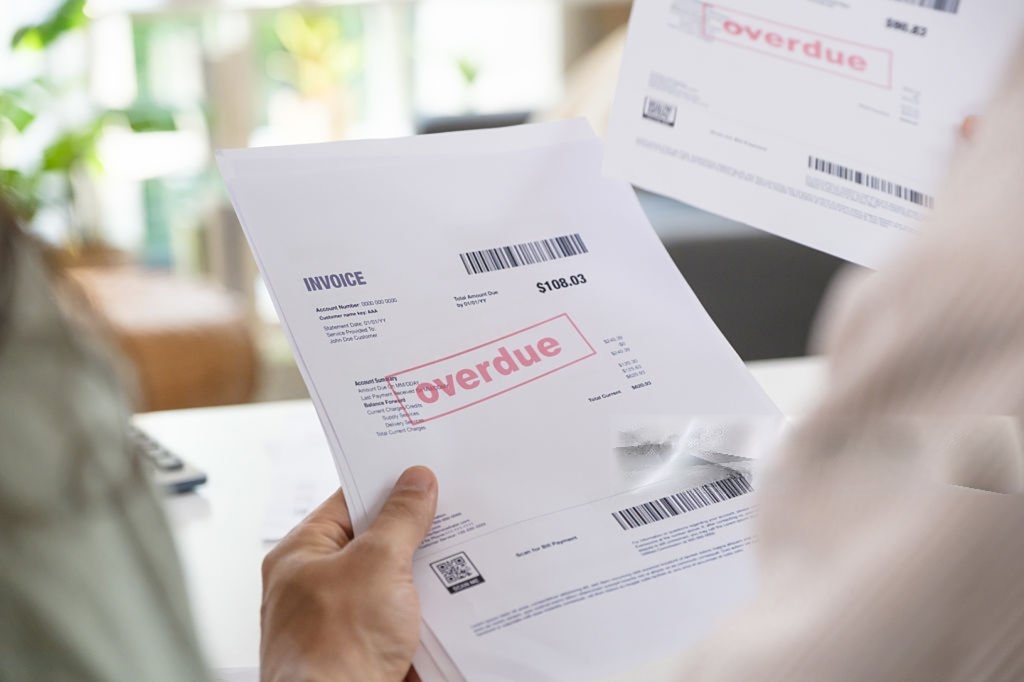
Overdue invoices are one of the most persistent and damaging problems for Australian agencies and service businesses. You've delivered the work, sent the invoice, and then — nothing. Days turn into weeks, follow-up emails go unanswered, and cash flow tightens while money that's already been earned sits uncollected.
According to research from Xero, Australian small businesses are owed an average of $38,000 in overdue invoices at any given time. For agencies billing multiple clients on retainer or project-based arrangements, that number can be significantly higher — and the cumulative impact on cash flow, team morale, and client relationships is substantial.
The good news is that overdue invoices are not inevitable. Most late payments are caused by the same preventable issues — unclear payment terms, friction in the payment process, lack of automated follow-up, and no consequence for consistently late-paying clients. This guide covers exactly how to address each one, with practical strategies you can implement immediately.
Why Invoices Go Overdue in the First Place
Before fixing the problem, it helps to understand what's actually causing it. Overdue invoices in Australian businesses typically fall into one of four categories:
Administrative friction on the client side — the client received the invoice but paying it requires more effort than they get to immediately: logging into a portal, finding banking details, raising an internal purchase order, or waiting for a finance team approval cycle.
Unclear or unagreed payment terms — the invoice says "14 days" but the client's accounts payable process runs on 30-day cycles, and nobody discussed this before the engagement started.
No automated follow-up — the invoice was sent and then forgotten until someone manually noticed it was overdue, by which point it was already 3 weeks late.
Cash flow issues on the client side — the client genuinely doesn't have funds available. This is the least common cause but the hardest to resolve without structural changes to how you invoice.
Understanding which category your overdue invoices fall into tells you which solution to prioritise. Most agencies have problems across all four — but fixing categories one, two, and three alone will eliminate the majority of late payments without any confrontational conversations.
1. Set Clear Payment Terms Before Work Begins
The most effective way to reduce overdue invoices is to make them structurally unlikely before the engagement even starts. Payment terms agreed to in writing, before work begins, remove ambiguity and give you a clear basis for follow-up when an invoice is late.
What to include in your payment terms:
Payment due date expressed as a specific number of days (7, 14, or 30) from invoice date — not vague language like "upon receipt"
Accepted payment methods clearly listed
Late payment fees or interest charges for invoices paid after the due date (even if you never enforce them, their presence changes client behaviour)
Deposit or upfront payment requirements for new clients or large projects
Recurring billing schedule for retainer clients, agreed in writing at the start of the engagement
In Australia, you're entitled to charge interest on overdue invoices under common law, and many agencies build a 1.5–2% per month late fee into their standard terms. The fee itself matters less than the signal it sends — clients who know late payment has a documented cost tend to prioritise your invoice over others with no stated consequence.
2. Invoice Immediately After Delivery
Every day between completing work and sending an invoice is a day added to your payment timeline. Agencies that batch invoice at the end of the month (a surprisingly common practice) are routinely waiting 45–60 days for payment on work delivered at the start of the month — and wondering why cash flow is tight.
Invoice immediately — ideally the same day work is delivered or a milestone is reached. This does three things:
Starts the payment clock running while the work is still fresh in the client's mind and their approval process is active
Signals professionalism and operational rigour, which positively influences how seriously clients take your payment terms
Reduces the administrative backlog of end-of-month invoicing that creates inconsistent cash flow patterns
For project-based work, consider milestone-based invoicing (invoice at 30%, 60%, and 100% completion) rather than a single invoice at the end. This reduces your exposure on any single project and keeps payment events distributed throughout the engagement.
3. Remove Friction From the Payment Process
The harder it is to pay your invoice, the longer it takes. Every additional step between a client receiving your invoice and completing payment increases the likelihood of it sitting in a to-do list rather than getting actioned immediately.
The most effective friction-reduction strategies are:
Payment links — instead of sending banking details and asking clients to initiate a bank transfer manually, include a single-click payment link directly in the invoice email. A client who can pay in 30 seconds is dramatically more likely to pay on the day they receive the invoice than one who needs to log into internet banking, find your BSB and account number, and initiate a transfer manually.
Direct debit authorisation — for recurring clients, setting up a direct debit arrangement through a payment collection platform eliminates the client action requirement entirely. Once authorised, payments are collected automatically on the due date without the client needing to do anything. This is the single most effective structural change for agencies with retainer-based revenue.
Multiple payment methods — not every client prefers the same payment method. Offering cards, bank transfer, and direct debit in the same invoice removes the "I'll pay when I have time to set up a bank transfer" delay that card-averse clients use to defer.
Clear invoice formatting — the invoice itself should make the total amount, due date, and payment method unmistakably clear at a glance. Clients who have to hunt for the total or due date are less likely to prioritise payment immediately.
4. Automate Payment Reminders
Manual follow-up on overdue invoices is one of the highest-cost, lowest-value tasks in any agency. Sending reminder emails one by one — checking which invoices are overdue, writing a message that's firm but not relationship-damaging, tracking who responded — consumes hours every week that should be spent on billable work.
Automated payment reminders solve this entirely. A well-configured payment collection platform sends reminders on your behalf according to rules you set once — for example:
3 days before due date: friendly reminder that an invoice is coming due
On the due date: confirmation that payment is due today with a direct payment link
3 days after due date: first overdue notice, polite but clear
7 days after due date: second overdue notice, escalated tone
14 days after due date: final notice before escalation
This sequence runs automatically for every invoice, every time, without anyone on your team needing to remember to send it. The result is a consistent, professional follow-up process that doesn't depend on someone's memory or available time.
When evaluating invoicing platforms, look for one that lets you customise both the timing and the content of each reminder — generic "your invoice is overdue" emails perform significantly worse than messages that include the invoice amount, due date, and a direct payment link in the body of the email.
5. Use Direct Debit for Recurring Clients
For agencies with retainer clients or recurring billing arrangements, direct debit is the most effective tool available for eliminating overdue invoices on regular payments.
Direct debit via BECS (the Australian direct debit rail) works by collecting payment directly from a client's bank account on a scheduled date, with their prior authorisation. Once the direct debit mandate is signed — which typically happens once at the start of an engagement — payments are collected automatically every billing cycle without any action required from the client.
The practical impact is significant:
Zero late payments on retainer invoices — payment is collected on the due date by default, not when the client gets around to it
No card expiry risk — unlike recurring card payments, direct debit authorisations don't expire when a card does
Lower transaction fees — BECS direct debit typically costs less per transaction than card processing, which matters at scale
Automatic retry on failure — a good payment collection platform retries failed direct debit collections automatically rather than requiring manual intervention
For new retainer clients, present direct debit as the default payment method rather than an option. Most clients will accept it without pushback, particularly if you frame it as a convenience for them ("we'll collect automatically so you don't need to remember to pay each month").
For existing clients who currently pay by bank transfer or card, a direct migration to direct debit at contract renewal is the lowest-friction transition point.
6. Integrate Your Invoicing and Payment Tools
Overdue invoices are often a symptom of disconnected systems. When your invoicing tool doesn't talk to your accounting software, payment status has to be manually reconciled. When your payment processor isn't connected to your CRM, client payment history isn't visible to account managers. When nothing sends automated notifications, your team finds out an invoice is overdue only when someone manually checks.
Connecting your tools through a proper payment platform integrations setup eliminates these gaps. Specifically, look for:
Accounting software sync — two-way sync between your invoicing platform and Xero or QuickBooks means payment status updates automatically in your books when an invoice is paid, without manual reconciliation.
Webhook notifications — real-time payment event notifications sent to your internal systems (or to Slack, via a communication integration) mean your team is immediately aware of payment events without checking dashboards manually.
REST API access — for agencies with custom internal tools or workflows, an invoicing API lets you build exactly the integration your business needs, rather than working around a platform's native limitations.
Automated email delivery — transactional email integration ensures invoice delivery, payment receipts, and reminder emails are delivered reliably at scale, not caught in spam filters or lost in a manual send queue.
The time saved by properly integrated payment tooling compounds quickly — what starts as a few hours a week of manual reconciliation and follow-up becomes a fully automated workflow that runs without human intervention.
7. Protect Client Payment Data to Build Trust
One reason some clients are slow to set up direct debit or use online payment links is concern about the security of their payment data. Addressing this proactively — rather than waiting for a client to raise it — removes a barrier that's more common than most agencies realise.
If your invoicing platform handles payment data to enterprise security standards, make that visible. Specifically, clients are reassured by knowing that:
Card data is handled by certified payment processors and never stored on your invoicing platform's servers
All data is encrypted in transit and at rest
Access to their payment and invoice data is controlled by role-based permissions
Every transaction and status change is logged in an immutable audit trail
PayDirect's approach to payment security including PCI DSS-aligned infrastructure, AES-256 encryption, and full audit logging is documented publicly on the PayDirect security page. For agencies that need to demonstrate their payment collection process meets enterprise security requirements, this level of transparency is often the difference between a client authorising direct debit quickly and delaying indefinitely.
8. Identify and Address Chronically Late Payers
Not all overdue invoices are equal. Most agencies have one or two clients who are consistently late — the same names appear on the overdue list every month, regardless of how good your systems are.
For chronically late-paying clients, the solution is structural rather than operational:
Require upfront payment or a deposit — shift the payment risk before work starts rather than after it's delivered
Shorten payment terms — if a client consistently pays on day 21 of a 14-day term, move them to a 7-day term so their actual payment date aligns with your cash flow needs
Pause work until payment is received — a clearly communicated policy of pausing active work when invoices exceed a certain overdue threshold is the most effective behavioural intervention available, and most clients will pay immediately rather than risk work stopping
Charge the late fee — if your terms include a late payment fee and you never enforce it, it has no deterrent effect. Enforcing it once, even at a reduced rate, signals that your terms are real
For clients who are persistently problematic despite these measures, the honest calculation is whether the revenue justifies the cost — in time, cash flow, and team energy — of managing them. Agencies that drop their two worst-paying clients frequently find their overall cash flow improves despite the revenue reduction.
What Good Looks Like: A Fully Automated Payment Collection Workflow
When all the above is in place, a well-run agency payment collection workflow looks like this:
Engagement starts — payment terms agreed in writing, direct debit mandate signed, billing schedule confirmed
Work is delivered — invoice generated automatically from a template and sent immediately via the invoicing platform
Pre-due reminders — automated reminders sent 3 days before and on the due date, each with a direct payment link
Payment collected — direct debit collected automatically on the due date for recurring clients; payment link used for project invoices
Failed payment — automatic retry triggered, team notified via webhook/Slack notification
Overdue sequence — automated escalating reminders sent at 3, 7, and 14 days overdue if payment hasn't been received
Reconciliation — payment status synced automatically to accounting software, no manual entry required
This workflow runs without manual intervention for the vast majority of invoices. Your team's involvement is limited to handling genuine exceptions — clients with disputes, payment method changes, or genuine hardship situations — rather than the administrative overhead of chasing every overdue invoice individually.
Frequently Asked Questions
How do I legally chase an overdue invoice in Australia? In Australia, you can chase overdue invoices by sending formal written notices, charging interest as specified in your payment terms, engaging a debt collection agency, or pursuing the matter through the relevant state tribunal (such as VCAT in Victoria or NCAT in NSW) for amounts under the small claims threshold. Always keep written records of all communications and payment terms from the start of the engagement.
What is a reasonable payment term for Australian agencies? Most Australian agencies use 14-day payment terms as a standard. Seven-day terms are common for smaller invoices or established clients with good payment history. Thirty-day terms are standard in enterprise and government contexts where accounts payable cycles are longer. Align your terms with how quickly you need cash flow rather than defaulting to 30 days because it feels standard.
Can I charge interest on overdue invoices in Australia? Yes — Australian businesses can charge interest on overdue invoices under common law. Most agencies specify the interest rate in their payment terms (typically 1.5–2% per month) to make the entitlement explicit and enforceable. If your terms don't specify an interest rate, you can still claim interest but the rate defaults to the courts' prescribed rate.
What is the best way to collect recurring payments in Australia? Direct debit via BECS is the most reliable method for collecting recurring payments from Australian clients. It eliminates the need for client action on each payment cycle, has lower transaction fees than card processing, and doesn't carry card expiry risk. Setting up direct debit through a payment collection platform that supports Australian direct debit rails gives you automated collection with automatic retry on failed payments.
How much do overdue invoices cost Australian businesses? Beyond the face value of unpaid invoices, overdue invoices cost Australian businesses in lost staff time (chasing payment), financing costs (covering cash flow gaps while waiting for payment), and opportunity cost (time spent on collections rather than billable work). Research from Xero estimates Australian SMEs spend an average of 1.8 hours per week managing overdue invoices — time that compounds to nearly 100 hours per year per business.